
Markets regulator Securities and Exchange Board of India (Sebi's) measures to curb speculative activity in the Rs 450-trillion-a-day futures and options (F&O) market is not a case of "throwing the baby out with the bathwater," whole-time member (WTM) Ananth Narayan said on Friday. "As a regulator, we are conscious that we must not throw the baby out with the bathwater. "When it comes to frenzied trading in options nearing expiry, however, it is difficult to see any baby in this bathwater," he said while delivering his address at the 21st FICCI Annual Capital Markets Conference.

The scare of communicable diseases seems to be gripping the country with Maharashtra reporting 28 Zika cases this year, the highest since 2021.

India maintained 43rd rank on an annual World Competitiveness Index compiled by the Institute for Management Development (IMD) that examined the impact of COVID-19 on economies around the world this year. The 64-nation list was led by Switzerland, while Sweden has moved up to the second position (from sixth last year), Denmark has lost one place to rank third, the Netherlands has retained its fourth place and Singapore has slipped to the fifth place (from first in 2020). At eighth, Taiwan reached the top-10 for the first time since the ranking began 33 years ago (moving up from 11th last year).

Equity benchmark indices ended flat on Wednesday with Sensex sliding 33 points and Nifty gaining 9 points after an unabated record-breaking rally in the last few trading sessions. Weak global market trends and fall in HDFC twins also spoiled markets party. The 30-share BSE Sensex dipped 33.01 points or 0.05 per cent to settle at 65,446.04.

International Monetary Fund Chief Economist Gita Gopinath tells Indivjal Dhasmana high-frequency indicators for the third quarter of 2021 indicate momentum in economic recovery in India.

'An in-house contest encourages employees to share yoga and well-being practices with their families.'

The Business Confidence Index (BCI) prepared by the Delhi-based think tank NCAER declined by 27.5 per cent in the first quarter of the current financial year over the previous quarter mainly on account of the second wave of the COVID-19 pandemic. The BCI on a quarter-on-quarter basis decreased by 35.3 per cent for the services sector, 32.9 per cent for the consumer durables sector, 32.3 per cent for the capital goods sector, 17 per cent for the intermediate goods sector and 14.3 per cent for the consumer non-durables sector, NCAER said in a release.

HDFC was the top laggard in the Sensex pack, shedding over 3 per cent, followed by Infosys, L&T, Kotak Bank, Bajaj Finserv and Tech Mahindra.

India's manufacturing sector activities moderated in March with companies reporting softer expansions in new orders and production as inflation concerns dampened business confidence, a monthly survey said on Monday. The seasonally-adjusted S&P Global India Manufacturing Purchasing Managers' Index (PMI) was at 54.0 in March, down from 54.9 in February, highlighting weakest rate of growth in terms of production and sales since September 2021. The March PMI data pointed to an improvement in overall operating conditions for the ninth straight month.

South Korea's move to ban stock short-selling may further delay its quest to bag an 'upgrade' to 'developed market' status from global index provider MSCI, said analysts. South Korea will prohibit stock short-selling until June 2024 to allow its regulators to "actively" improve rules and systems. South Korea is currently classified as an 'emerging market (EM)' alongside India, China and Taiwan in MSCI indices.

After an extremely stable 2023, the Indian rupee started 2024 on a promising note and has turned out to be the best-performing Asian currency so far in January, appreciating 0.1 per cent despite 2 per cent rise in the dollar index. All other Asian currencies depreciated by around 1.4-4 per cent during the month. The local currency regained its ground against the greenback on the back of foreign portfolio inflows, said market participants.

'Sell in May, go away' is a popular market adage. But 'Don't sell any new shares in May' is the best kept secret of Dalal Street that's set to break. Sample this: the last four General Election election cycles starting 2004 have not seen a single initial public offering (IPO) launch during the month of May.

A host of them have a tracking error of more than 1 per cent

Dwaipayan Bose simplifies the whys and hows of revisiting your financial goals

'Indian investors have always been debt-heavy but with growing financial awareness they are getting comfortable with equities.'

The current up move, according to analysts, closely resembles the rally post the global financial crisis in 2008-09, not just in quantum and speed, but also the way small-and mid-cap indices outperformed large-cap peers.

India's services sector activity witnessed a sharp upturn in August on the back of stronger gains in new business, ongoing improvements in demand conditions and job creation, a monthly survey said on Monday. The seasonally adjusted S&P Global India Services PMI Business Activity Index rose from July's four-month low of 55.5 to 57.2 in August, amid a quicker upturn in business activity and the sharpest rise in employment for over 14 years. For the thirteenth straight month, the services sector witnessed an expansion in output.

Global trends, trading activity of foreign investors, outcome of state elections and RBI's interest rate decision are the major factors that will drive the movement in the domestic equity markets this week, analysts said. "Global markets are currently in a fabulous mood. The US 10-year bond yield and the dollar index are also cooling off, which gives strength to the market. These factors will be closely monitored, as they have the potential to influence market sentiment," said Pravesh Gour, senior technical analyst, Swastika Investmart Ltd. On the political front, the results of assembly elections in five states are eagerly anticipated, Gour said.

Against the Reserve Bank of India's (RBI's) projection of 7.1 per cent, India's first quarter (Q1) 2024-25 (FY25) gross domestic product (GDP) growth came in at 6.7 per cent. This is in line with market expectations and significantly lower than the 7.8 per cent recorded in the fourth quarter (Q4) 2023-24 (FY24) and 8.2 per cent in Q1FY24. The quarter witnessed decreased government consumption and investment spending due to the parliamentary election.

The ED probe pertains to alleged financial irregularities in the redevelopment of Patra Chawl, a tenement, and related financial transactions involving his wife and associates.

Foreign portfolio investors' (FPIs') net investments in the domestic debt market surged in December, marking a 77-month high, that is, since July 2017. According to market participants, this significant uptick in FPI inflows can be attributed to the post-domestic policy outcome and the US Federal Reserve's dovish stance at the December policy. FPI inflows into debt stood at Rs 18,393 crore in December against Rs 14,106 crore in November, according to data on the National Securities Depository Limited.

The IHS Markit India Services Business Activity Index improved from 52.7 in November to 53.3 in December, highlighting the second-strongest rate of increase in output in over a year, after July. However, the overall level of positive sentiment remained below its long-run average.

rediffGURU Dev Ashish answers your personal finance and mutual fund queries.

The headline seasonally adjusted IHS Markit India Manufacturing Purchasing Managers' Index (PMI) fell to 27.4 in April, from 51.8 in March, reflecting the sharpest deterioration in business conditions across the sector since data collection began over 15 years ago. The index slipped into contraction mode, after remaining in the growth territory for 32 consecutive months. In PMI parlance, a print above 50 means expansion, while a score below that denotes contraction.

Nikkei 225 index hit the 40,000 mark for the first time ever on Monday, continuing its bull-run that saw the index reclaim its 1989 peak of 34,000 levels in February. as global investors latched on to Japan's biggest companies on improving shareholder returns, the weaker yen and booming corporate profits. Analysts remain bullish on Japan, mostly aided by gains in technology shares. Adoption of artificial intelligence (AI), according to a note by Morgan Stanley, is likely to benefit Japanese companies, which is almost at par with the US-based companies.
India's manufacturing sector activities moderated in August, as business orders and production rose at softer rates due to the pandemic and rising input costs, a monthly survey said on Wednesday. The seasonally adjusted IHS Markit India Manufacturing Purchasing Managers' Index (PMI) stood at 52.3 in August, down from 55.3 in July, indicating a softer rate of growth that was subdued and below its long-run average. The August PMI data pointed to an improvement in overall operating conditions for the second straight month.
Index funds need to urgently address the issue of lower costs, because this can make a considerable difference to the total returns over a period of time.

Decisions should not be based on feelings, such as optimism or pessimism about the stock market or specific investment products, suggests Avinash Luthria.

Market participants attribute the stability to the Reserve Bank of India's timely intervention in the foreign exchange market, both in terms of selling and buying dollars.

A healthy diet and physical activities with no alcohol consumption can help in reducing overall cancer risk.
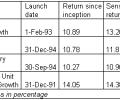
Are diversified equity funds better than index funds? How do they compare over a ten year period? Who wins?

'If you see another 1000-point correction, people may start panicking.'

online recruitment exceeded the year-ago level in 17 industry groups.
India's manufacturing sector activities improved in September as companies benefited from strengthening demand conditions amid the easing of COVID-19 restrictions, a monthly survey said on Friday. The seasonally adjusted IHS Markit India Manufacturing Purchasing Managers' Index (PMI) improved from 52.3 in August to 53.7 in September, indicating a stronger expansion in overall business conditions across the sector. The September PMI data pointed to an improvement in overall operating conditions for the third straight month. In PMI parlance, a print above 50 means expansion while a score below 50 denotes contraction.

Equity markets would take cues from domestic inflation data announcement, global trends and trading activity of foreign investors in a holiday-shortened week ahead, analysts said. Markets would remain closed on Tuesday for 'Diwali Balipratipada'. "As we enter a truncated week with Muhurat trading on Sunday, global cues will play a pivotal role in shaping the market direction.
A passive strategy known as indexing is much less complicated and involves tracking an index like say the Sensex or the Nifty and building a portfolio with the same stocks in the same proportions as the index.

An index value of 42 to 46 means moderate decline.

While Bangladesh ranked 75, Myanmar and Pakistan are in the 78th and 88th position. Last year, India's rank was 102 out of 117 countries.

India's services sector growth rate saw a slight fall in July but remained in the positive terrain for the ninth month in a row, amid rise in new orders and employment levels holding up, an HSBC survey says.

Leading job portal Monster.com said on Monday that recruitment activities in many sectors witnessed a decline last month compared to July.
 © 2026 Rediff.com - Advertise with us - Disclaimer - Privacy Policy - Sitemap - Feedback - About us - Terms of use - Grievances